
In the Cacapon Valley, hunting has never been just a pastime. For generations, it was also a practical necessity, helping families put food on the table and make ends meet during difficult times. Deer, squirrel, turkey, and other game provided an affordable source of protein, especially for rural families living close to the land.
Women and girls have long been part of that tradition. Across the Valley, they hunted alongside fathers, husbands, brothers, and grandfathers, learning the same skills and contributing in meaningful ways to family life and survival. Their involvement is not new or unusual. It has always been woven into the fabric of Valley life.
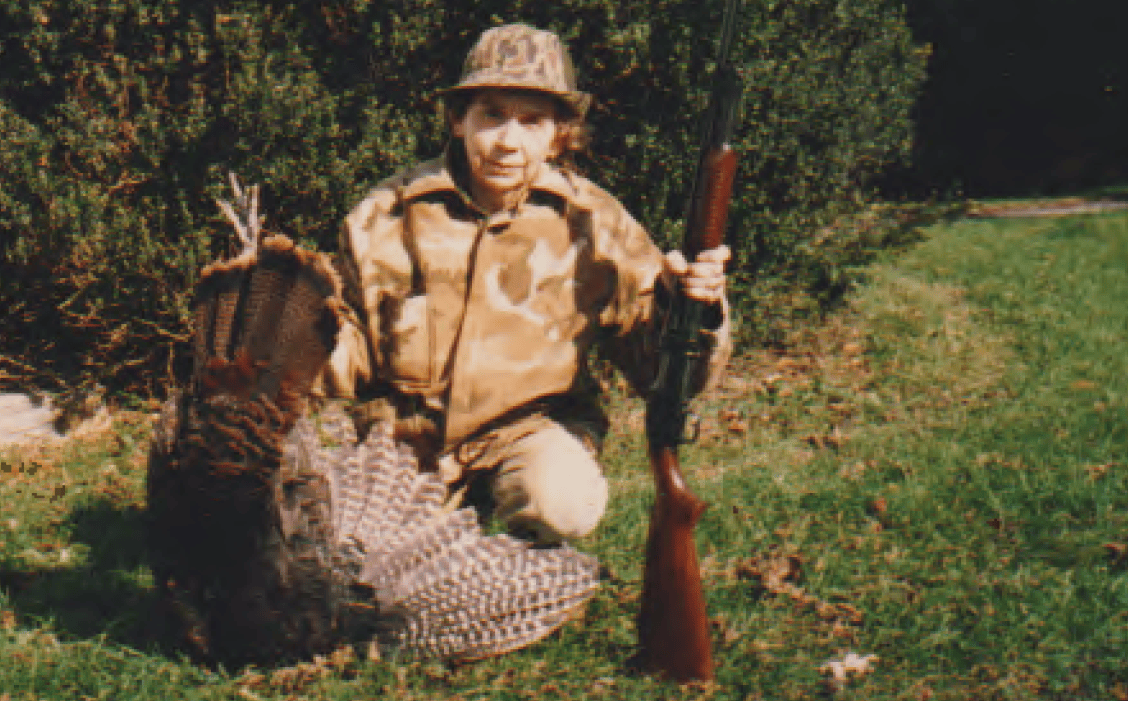
The Rudolph family, who farm in Yellow Spring, remembers their aunt Virginia, born more than ninety years ago, as a “crackerjack shot,” with the photos to prove it. Her story is not unusual. Women throughout the Valley were known for their skill, confidence, and self-reliance in the woods.
One of the most memorable stories comes from Aunt Bill, a member of the Hahn family from Dutch Hollow near Yellow Spring, who at age 92 recalled her first hunting experience with humor and grit:
“My husband Jim taught me to hunt. He took me up in the woods to this big old tall hickory nut tree, there was a squirrel up there and he yelled, ‘Shoot it!’ I guess he forgot to tell me the gun would buck. I held the gun up, but I didn’t hold it tight. For a second I thought that thing had kicked my head off. I got the squirrel, but boy, I never let on to Jim how it kicked me.”
It is a story that captures both the learning curve and the determination that shaped so many Cacapon Valley traditions.
Today, that legacy continues. Granddaughters still head into the woods alongside grandfathers during hunting season, and many hunt clubs across the Valley include women as active members. What may seem like a modern shift is actually the continuation of a long-standing tradition. 
Hunting also played an important role in the Valley economy. Over time, the region became known as a destination for sportsmen, bringing visitors and seasonal income into local communities.
The area around Wardensville was once widely recognized throughout the East for its excellent hunting. Tom Nugent, who has been connected to Hardy County for more than forty years, remembers first reading about the area in a national publication:
“When they do the issue, naming the best hunting areas by region, one year it was right down the road, little old Wardensville and George Washington National Forest. As far as whitetail deer, this was it. That little town was packed during hunting season. The White Star, the little beer joint, they used to even rent out beds upstairs.”
During hunting season, local businesses filled up, homes opened their doors to visitors, and many Valley families earned extra income by providing meals and lodging to hunters.
For some local families, that income was essential. Martha Smith, whose family had a turkey farm outside Wardensville, remembers how hunting season brought vital opportunities across generations, including to her mom and nine siblings after her father passed away:
“My mom used to keep as many as twenty-four hunters and us younger ones had to get up and pack all their lunches and help with the meals. Well after Dad died that was probably the main income she had, having the deer hunters. And some of the hunters would stay out at the Camp Jackson, but they would come here to get their meals. Mom fixed the breakfast, we packed the lunches, and then she fixed the suppers.”
Hunting in the Valley has always been about more than recreation. It is tied to food, survival, rural heritage, and community resilience.
From skilled women hunters to families finding ways to support one another, hunting has shaped the Valley in ways both visible and unseen. It has sustained livelihoods, strengthened traditions, and created stories that continue to echo across generations.
The most enduring part of that legacy is not just the tradition itself, but the people who continue to carry it forward.