
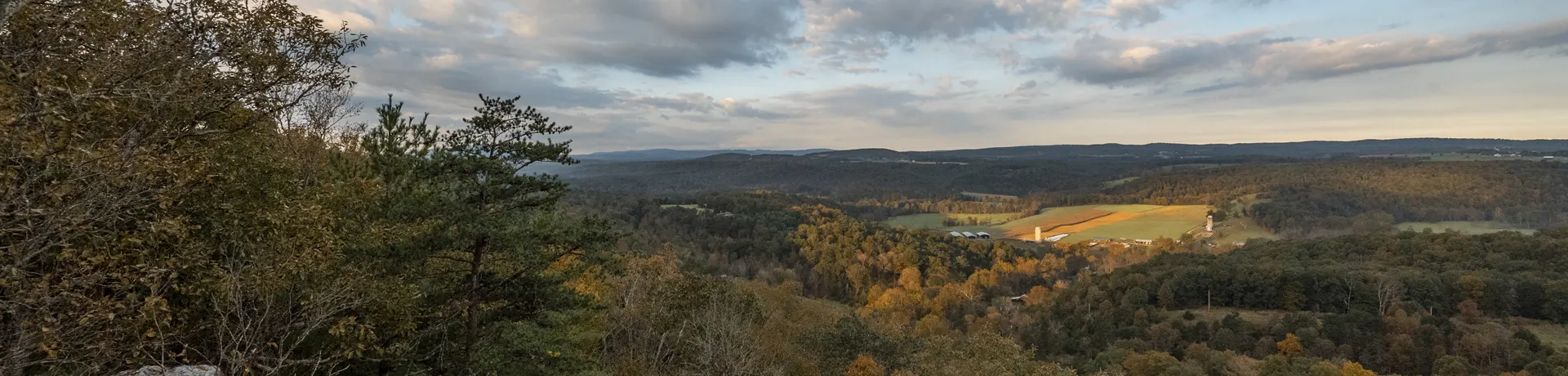

For nearly a century, one West Virginia family has worked to protect a special place along the North River — ensuring the forests, streams, and wildlife remain for generations to come.
For Gene E. Fisher, the 163 acres known as North River are more than just land.
It’s a place woven into his family’s story for nearly a century.
“When I think about this land,” Gene says, “I always think about my grandparents and the people who first decided to protect it.”
In 1926, Gene’s grandparents and several others from Keyser, West Virginia made an unusual decision. They purchased land hours away from home and formed the Forest and Stream Protective Association.
Their goal was simple: protect forests, streams, and wildlife in West Virginia.
That decision still protects North River today.
But to understand why they did it, you have to look at what West Virginia looked like at the time.
A Landscape That Needed Protection
At the turn of the twentieth century, much of West Virginia had been heavily logged. Hillsides once covered in hardwood forests were stripped bare.
Without trees to hold the soil, erosion increased. Streams were damaged, and many communities built around the timber industry collapsed once the forests were gone.
Gene remembers hearing stories about places like Hacker Valley, where his mother grew up.
“The economy there was ruined once the trees were gone,” he says.
Old photographs from towns like Cass show mountainsides covered with stumps instead of trees.
For people who loved the land, watching the forests disappear was heartbreaking.
Gene believes that’s what inspired his grandparents and their friends to act.
“They wanted to do something constructive,” he says. “They wanted to preserve what was left.”
A Mission That Still Matters
The founders created the Forest and Stream Protective Association and wrote their purpose clearly into the organization’s constitution:
“To propagate and preserve fish and game and all other wildlife; to protect all forests and streams within the State of West Virginia.”
Those words guided them through difficult times. The group held onto North River even during the Great Depression, when many families were struggling just to survive.
“That tells you how much this land meant to them,” Gene says.
Nearly 100 years later, the land is still cared for by the families who helped start the Association. Today, third and fourth generation members share the responsibility of protecting it.
To ensure the land remains the same for future generations, the property was placed under a conservation easement — a permanent agreement that protects it from development.
“We wanted to stay true to the purpose our founders had,” Gene says. “They cared deeply about this land, and we do too.”
A Place That Teaches
For Gene, North River has been part of his life since the very beginning.
“I was brought to North River before I could even walk,” he says.
Over the years he has spent countless days there exploring the woods, walking the streams, and watching the seasons change.
“This place humbles you,” Gene says. “It reminds you how small we are compared to the natural world.”
He often thinks about the words attributed to Chief Seattle:
“The earth does not belong to us; we belong to the earth.”
“We’re not owners forever,” Gene says. “We’re caretakers while we’re here.”
Listening to the Land
If anyone ever wonders why North River matters, Gene has a simple suggestion.
“Come here,” he says.
Stand on the ground. Wade in the stream. Listen.
You might see a kingfisher darting along the water or a tiny wren in the trees. You’ll hear the wind in the leaves and the quiet flow of the river.
“Just listen to the land,” Gene says. “It speaks in its own language.”
Places like North River have a way of slowing people down and reminding them what really matters.
“This land has a spirit to it,” Gene says. “When you spend time here, it has a way of healing you.”
Protecting North River for the Future
By placing North River under a conservation easement, the Forest and Stream Protective Association has ensured the land will remain protected for generations to come.
Gene hopes that long after he’s gone, families will still be able to walk these woods, wade in the stream, and experience the same connection to the land.
“My hope,” he says, “is that future generations will be humbled by this place the way we have.”
Because when you stand there — surrounded by forest, water, and wildlife — the feeling is hard to describe.
But Gene believes one phrase comes close.
“Almost Heaven,” he says.
“I believe it is.”
Help Protect Places Like North River
Places like North River remain protected because people care enough to act.
Whether by supporting conservation work or protecting their own land, individuals and families play an important role in keeping forests, farms, and streams intact for future generations.
Learn more about protecting land and supporting conservation →
www.cacapon.org/protecting-land/about-easements/