
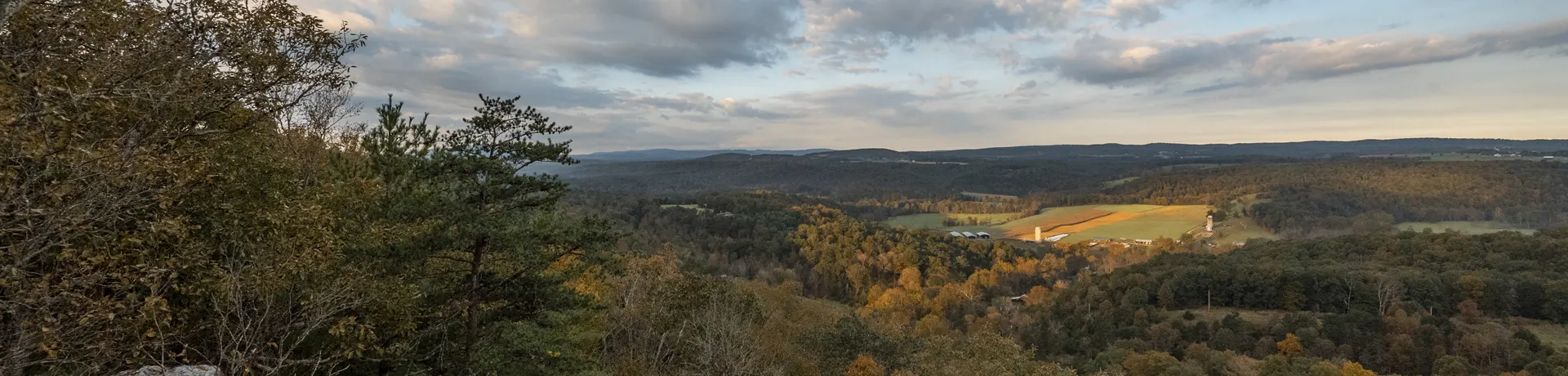
 Farming has long worn a romantic reputation – open fields, rolling hills, and a life close to the land. But for the families who have worked this Valley generation after generation, the truth is far more complex. Farming can be dangerous, isolating, and, at times, deeply heartbreaking. And yet, those same hardships often deepen a family’s bond to the land, knitting sorrow and joy together across the decades.
Few families embody this complexity quite as vividly as the Fryes of Wardensville. Their roots reach back to the earliest days of Virginia, when Joshua Fry – surveyor for the King of England and early mentor to a young George Washington – walked the ridges of what would later become West Virginia. The modern Frye farm sits on land that still bears the marks of that era: a towering brick farmhouse, believed to be over 200 years old, its thick walls and quiet rooms now filled with dust, light, and the faint outline of a circular carriage drive long reclaimed by the trees.
For Josh and his brother Joe, who grew up wandering those woods and fields, the land is as much a family album as it is a working farm. They remember homemade rolls and soups bubbling on a wood stove, thistles battled under summer heat, poultry sheds guarded from crafty owls, and the hearse their father once slept in to keep foxes at bay. Life on the farm was hard, but it was never dull.
It was also dangerous. Josh recounts the tragedy of the brother he never met – Henry – lost under a load of silage during harvest. Years later, Josh himself nearly died after falling beneath a tractor, pinned by the wheels and scraped raw along one side of his face. His father tried to walk away from farming after that, taking the family across the Virginia line in search of steadier work. But in the end, he could not leave.
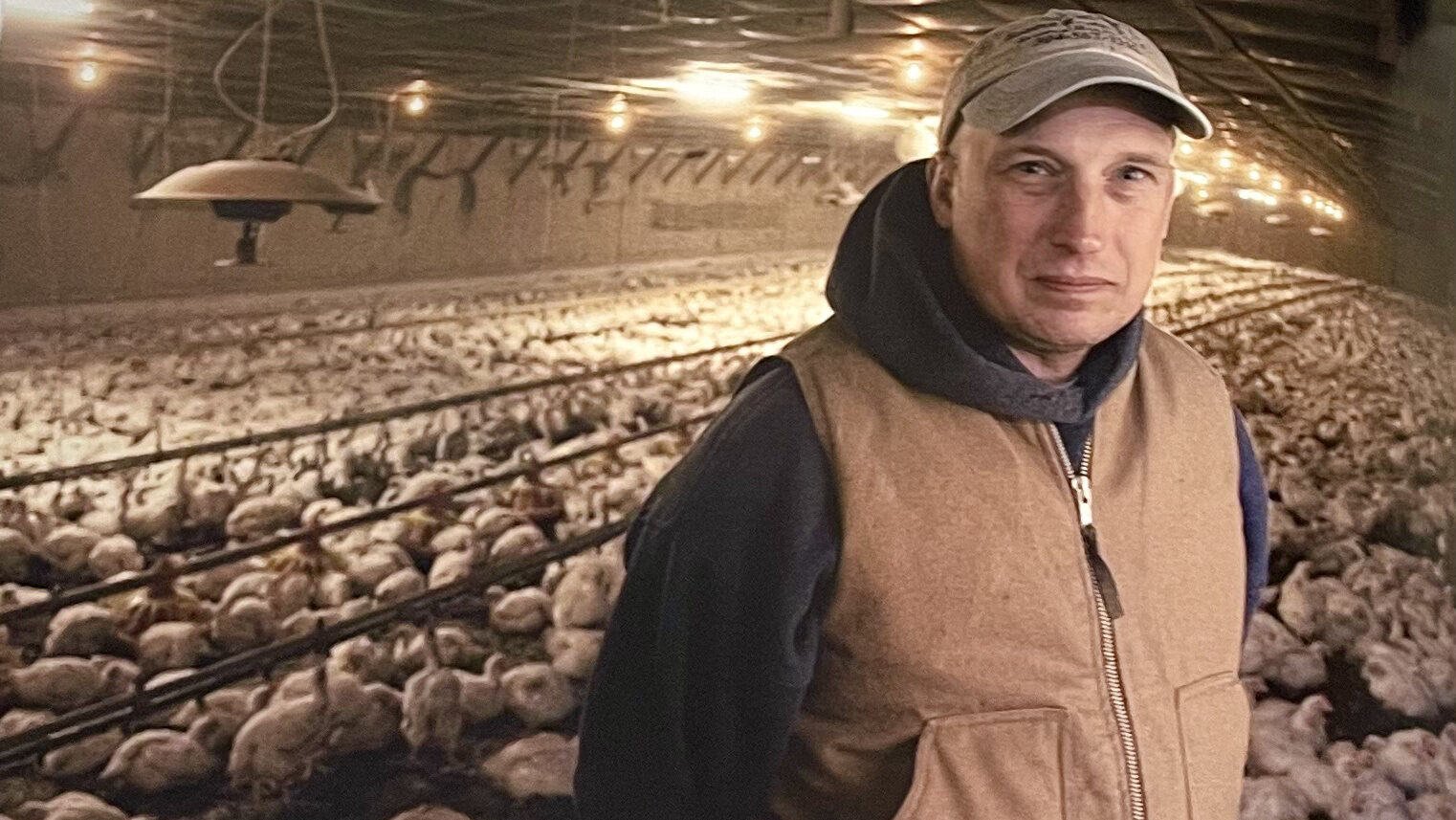
Josh tried, too. He studied printing in college and briefly imagined a different kind of future for himself. But the pull of home – and the fear of watching farmland fall to developers – drew him back in 1990. Today he raises poultry on the homeplace, wrestling with tight margins and the constant worry that one mechanical failure could lead to catastrophic losses. Still, creativity and grit endure. Josh is now experimenting with a poultry litter burner – the first of its kind in the country – converting waste into heat and reducing reliance on propane.
Both Frye brothers know that keeping farmland intact is no small achievement. They also know the grief of watching it slip away. Their mother, raised on a South Carolina farm, was heartbroken when her own family’s land was sold for development. “That was the only time I ever saw her cry,” Josh says quietly. “She couldn’t stand to see it go.”
Stories like the Fryes’ are not uncommon here. Many who’ve left the Valley find themselves drawn back to it, pulled by memory, family, and the slower rhythm of country life. Leon and Jackie Mongold left soon after they married but returned every weekend, children in tow. Even after raising kids in the city – museums, zoos, and summer camps – both children chose rural colleges. Today, their son has settled back in Wardensville.
Even the cattle seem to get attached to this place. Local herds, now in their sixth or seventh generation, often stay within the same valleys without a fence to hold them. As farmer Kent Haines jokes, “As long as there’s something to eat, they stay.” Others, like Julian Hott, swear their cattle know the land so well they could almost be registered to vote.
In a world where agriculture is more mechanized and farm ownership more precarious, these stories remind us how rare – and fragile – the continuity of place can be. Farms like the Fryes’ survive not by accident, but through stubborn resilience, shared memory, and the conviction that land is worth holding onto.
For those who grow up here, the Valley isn’t just home – it’s inheritance. It’s identity. And for many, it’s worth every hardship.