
 Some moments stay with us – not because they were dramatic, but because they quietly changed how we see the world.
In December 2015, longtime conservation supporter John Gavitt shared two simple photographs on Facebook. More than a decade later, he says those posts still capture exactly how he felt then – and how he feels now.
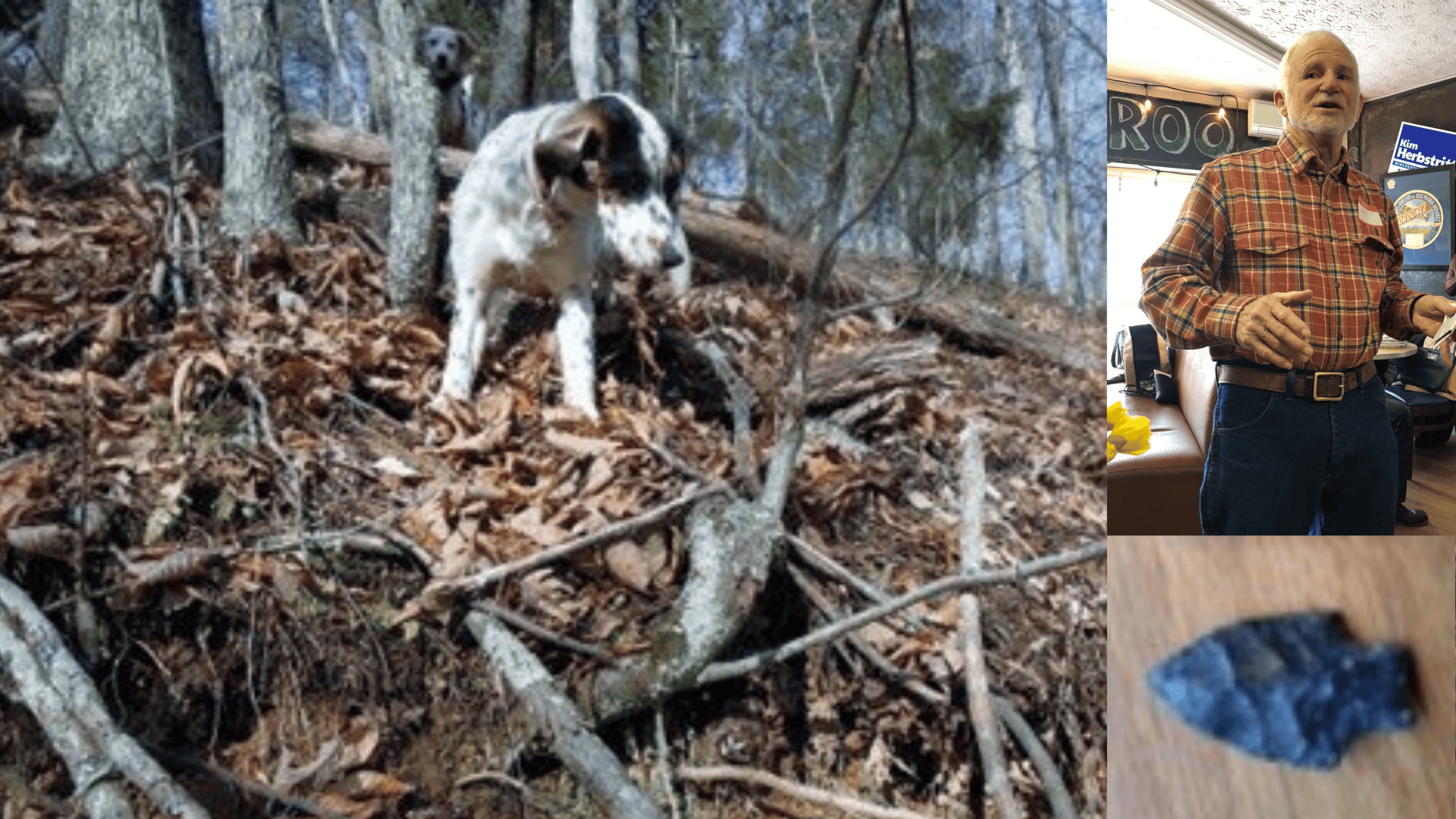
The first photo was of an arrowhead John and his wife Arlene found on their property in Frederick County while walking a familiar path that leads to Hogue Creek. It was an unusually warm winter afternoon, nearly 70 degrees, when John happened to look down and notice it lying in plain sight.
“It was just an arrowhead… but more than that,” John wrote at the time.
What struck him most, however, wasn’t the artifact itself—it was the questions it raised.
“Was it shot for practice, for game, or in anger?” he wondered. “In what century and by whom?”
The discovery sparked a wave of images and reflections about time, history, and perspective.
“We are on earth for a very short time,” John wrote. “What will we leave on earth after we’re gone? Money for relatives? Material wealth?”
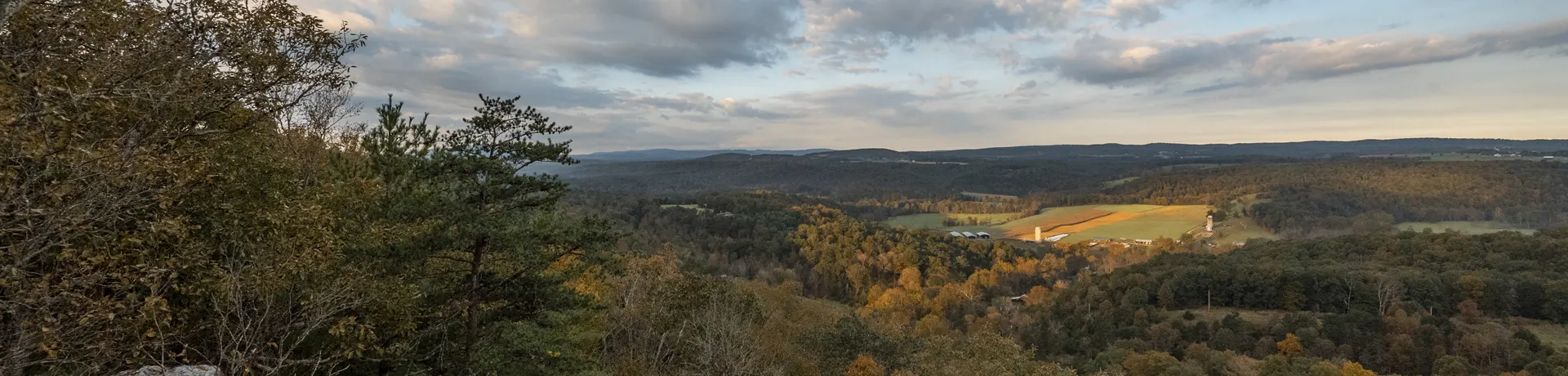
For John, the answer was clear. His property is protected by a conservation easement – a permanent commitment to keeping the land undeveloped. Three neighboring landowners made the same choice, resulting in more than 500 acres protected in Frederick County.
“That arrowhead never would have been found if it had been covered by a parking lot or a shopping mall,” John reflected.
He went on to imagine a future moment – long after he’s gone – when someone might stumble across a small object he left behind in the woods and pause to wonder about its story.
“That thought is really comforting to me,” he wrote.
The second photo John shared that December was of Bridgette, one of the English setters he loved hunting with when he owned land in Hampshire County, West Virginia.
During a quail hunt, John captured an image of a still-young Bridgette locked into a perfect point, focused on a quail hidden at the base of a tree root. In the photo, Bridgette is steady and alert—just as the unseen quail remains perfectly still.
“Bridgette was steady as a rock,” John recalled, “and so was the hidden quail.”
Today, Bridgette is gone, and John no longer owns that property. But the land itself endures.
A conservation easement now protects 437 acres from future development, ensuring the landscape remains open for wildlife, recreation, and new memories yet to be made.
“The land continues to be protected,” John says, “leaving plenty of room for new memories to be held by its future owners.”
For John Gavitt, that continuity—the way land holds both history and possibility—is the truest legacy.
“I can’t think of a better way to leave this earth,” he says. “And I therefore continue to be a proud supporter of the Cacapon and Lost Rivers Land Trust.”