
Protecting a watershed isn’t the work of a single organization – or even a single sector.
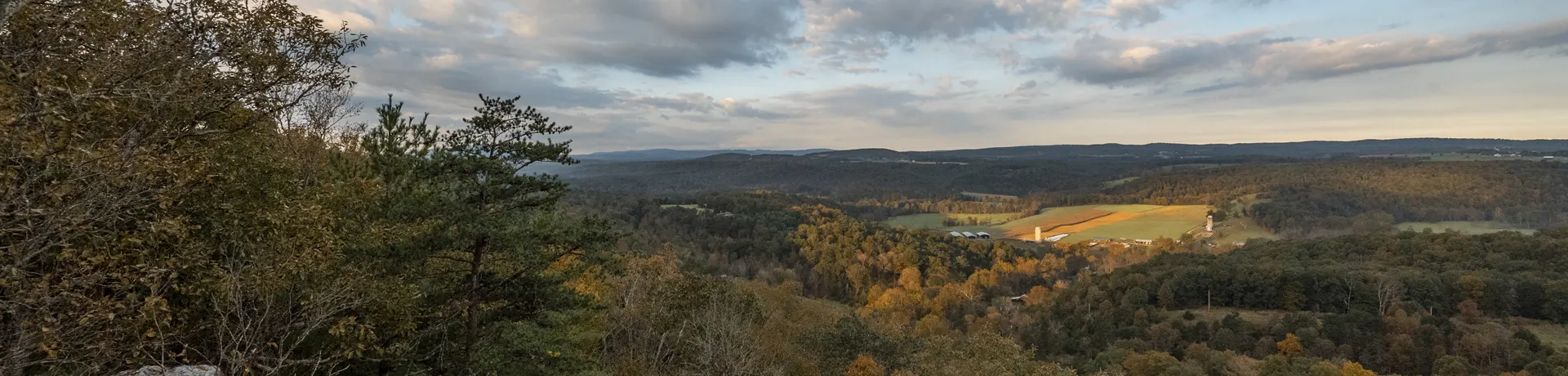
The Cacapon and Lost Rivers Watershed stretches across forests, farms, streams, and rural communities in eastern West Virginia. It’s a place where clean water, working lands, wildlife habitat, and people’s livelihoods are deeply connected. That interconnection is exactly why the Cacapon Watershed Collaborative exists.
The challenges facing this watershed are complex. While much of the landscape remains ecologically intact, the region sits within two hours of Washington, DC and is increasingly shaped by development pressure, land conversion, and changing economic realities for landowners—many of them small family farmers. When land is fragmented or ecosystems are degraded, the impacts ripple outward: water quality declines, habitat corridors are broken, and communities lose the natural systems that sustain them.
No single organization can address all of that alone.
The Cacapon Watershed Collaborative was formed to meet this reality head-on – by bringing together nonprofits, land trusts, government agencies, researchers, and landowners around a shared table. The goal is not to duplicate efforts, but to align them: sharing expertise, coordinating strategies, and working at the scale the watershed itself demands.
At the heart of this collaboration is the Cacapon Watershed Conservation Plan, a science-based roadmap developed through extensive research, local knowledge, and collective debate. But what makes the plan meaningful is how it’s used. The Collaborative treats it as a living document—regularly revisited, updated, and refined as conditions change and new data becomes available.
Partners meet quarterly to pause, reflect, and adapt. Smaller working groups focus on specific priorities such as forests, farms, streams, and keystone species—tracking indicators of health and translating information into action. Decisions are made by consensus, with a shared understanding that long-term stewardship requires flexibility, trust, and accountability.
Just as importantly, the Collaborative remains grounded in community. About 85% of the land in the watershed is privately owned, which means conservation here depends on relationships – with landowners, farmers, and local organizations who care deeply about their land but may lack the resources to protect it on their own. Through the Collaborative, partners provide technical assistance, education, and support that helps landowners keep land intact, productive, and resilient.
In a time when environmental challenges are increasingly interconnected – and increasingly urgent – the Cacapon Watershed Collaborative represents a different way forward. It’s not about one organization leading the way, but about many partners moving together.
In the coming weeks, we’ll be highlighting the individual organizations and agencies that make up the Collaborative – each bringing unique strengths, perspectives, and tools to this shared effort. Together, they show what’s possible when conservation is collaborative by design.
Interested in joining the Collaborative, please contact us at (304) 856-1188 or through our contact form.