
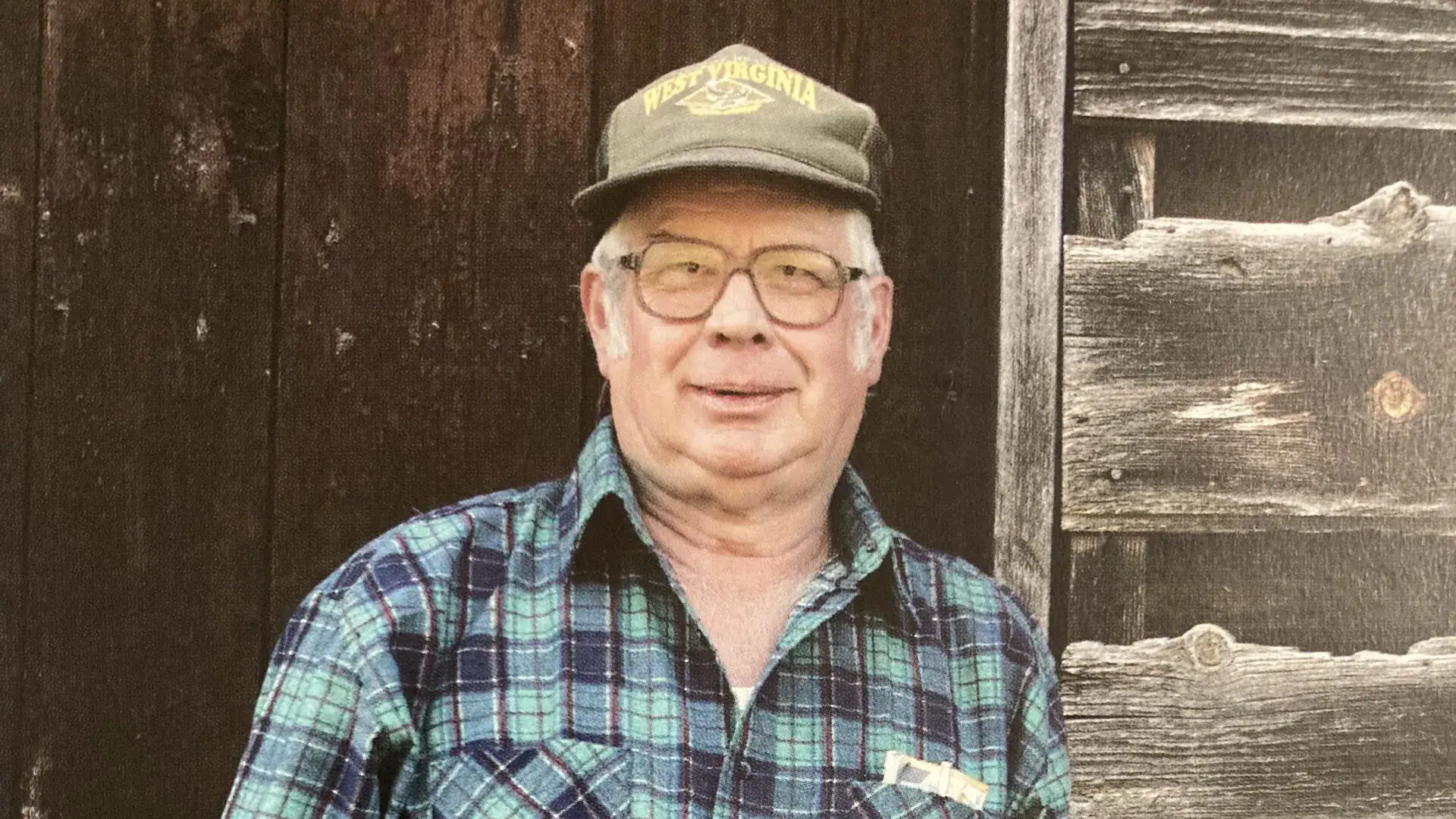
 We were sad to hear of Ralph Spaid’s passing on August 9. One of our first easement landowners, Ralph was known for his kindness and for being fiercely protective of his family land and the bounties it brought them. Here’s a story that highlights Ralph’s legacy…
Shortly after Ralph Spaid inherited a beautiful, secluded farm known as “Little Egypt” from his Uncle Winifred Orndorff, he made a trip into town to meet with the lawyer. Ralph says he knew something was up when the fellow addressed him as Mister Spaid. Startled Ralph told him “to watch his tongue” and “just call me Ralph.” “Well, Ralph you’re a wealthy man this morning.” “No,” Ralph replied, “Matter of fact, I don’t know that I could go across the street to the Freeze Queen and buy lunch.”
“Well, you’re a wealthy man today… how would you like a million dollars for that property of yours?”
“No, I don’t believe.”
“How about two million?”
“No, sir.”
At $5 million, Ralph had had enough. “Now just stop it right there. There’s no need to discuss it; it’s not for sale.”
Ralph says a lot of folks think he is a little touched for not “taking the money and running.” But Little Egypt’s role in his family’s history made it unthinkable to sell “the little pasture in the wilderness.” If nothing else, Ralph could not forget the sacrifices his family had made to save the farm during the Great Depression of the 1930s. “I just hated to think of all the hardships and the hard work that my grandparents and my uncle had done to acquire, develop, and save the place and then see it broken up into 20-acre lots,” he says. “And that is what’s bouncing next door. That’s what joins me on two or three sides.”
Ralph sees Little Egypt as a legacy he holds in trust for the next generation of the Spaid family, which traces its roots in the Valley back to the Revolutionary War.
The gravel road up to the farm sparks all kinds of memories. What looks like any other leafy stretch of forest is for Ralph Spaid a rich green catalog of the past. He points out the still barely discernible outlines of what used to be the original Yellow Spring that fed the local community, and for which the town of Yellow Spring got its name, where once was a distillery, the remains of a limekiln, and the former site of a tannery.
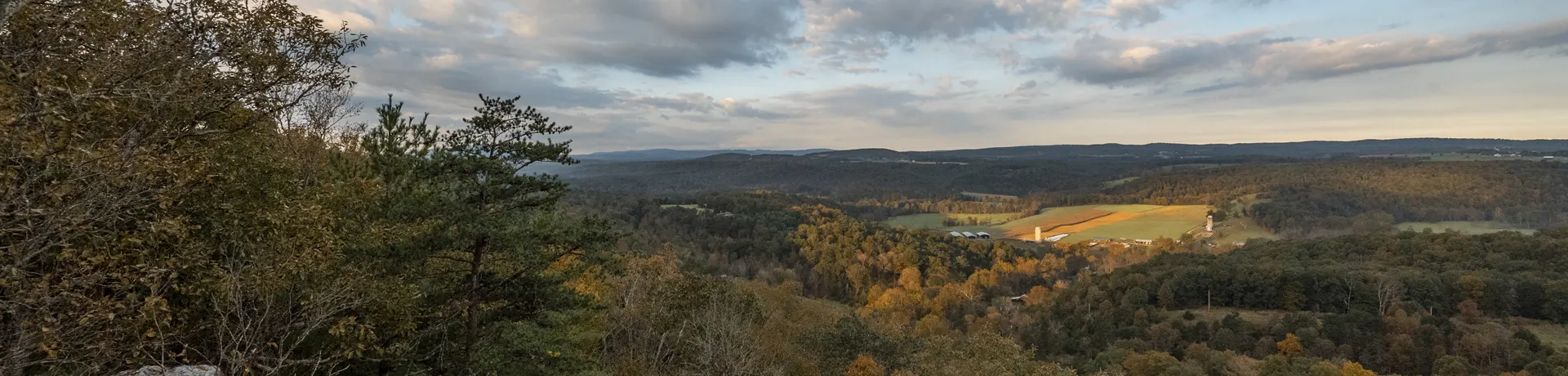
The farm, Little Egypt, covers nearly a square mile of fields and forests in a secluded bowl-shaped valley in Hampshire County. A silvery creek winds through its grassy fields, which are kept close cropped by roaming cattle. A modest wooden farmhouse sits solidly next to the stream, protected from the winds that often roar across the ridges. Although its boards are weathered and a window is missing a pane, the house still has a look of settled confidence. You almost expect a woman to come out of the door, wipe her hands on her apron, and encircle you with the same solid embrace that the hills offer this valley.
“Just the raw beauty of the place is something on its own,” Ralph says. “Secluded, it’s like being in another world. Can’t see a neighbor and don’t want to.”
Ralph loves to tell the story of how Little Egypt got its name. It alludes to an Old Testament story, Ralph says. In Exodus, a famine in Israel forces the house of Jacob to leave their native land and to seek grain in Egypt. It was a similar disaster in the Valley over a hundred years ago that brought neighbors flocking to Little Egypt. “I don’t know what the disaster was,” he says. “Whether it was from drought or whether it was from flood, but along the Cacapon River the crops weren’t any good, and the folks came up here to get enough wheat to get them through the winter, as well as corn for cornmeal and a little bit of seed for the upcoming spring. Because everybody back then just shelved the best corn they had and kept it for seed for the next year.”
Luckily, Little Egypt had generous supplies to share. “There was a huge granary… and a big barn,” Ralph recalls. “I’ve heard Uncle Win say that one year he could remember they had a thousand bushels of small grain and six hundred bushels of ear corn.” Such bountiful harvests would have been “a lot of hard work for an old man and four or five boys, with just a couple teams of horses.”
The surrounding forests also provided the family with food and even medicines. “I used to walk by some of those old trees that are four or five feet across the stump and figure how many squirrels my granddaddy might have taken off of that to feed the family.” One particular tree, a shellbark hickory, reminds him of an ancestor who was a self-taught physician. His Great-Grandfather Orndorff knew a lot about roots and herbs and medicinal plants. Ralph tells how this Orndorff could make a cough medicine out of shellbark hickory that made you think “it was going to kill you when you took it, but that was the end of the cough. He learned from a book he ordered from somewhere. “
Today Ralph Spaid maintains the family’s tradition of fiercely protecting Little Egypt, not so much from trespassers as from developers. For him, Little Egypt is more than a farm; it is a living landscape of memories he wants to pass along to future generations, and one he is striving to pass on to his own nieces and nephews.